About Music Compositions Live Thanks Contact

Barcelona  |  United Kingdom

Joe
Luca

Jazz & Indian Classical Music

Saxophone · Sitar · Composition

Joe Luca is a UK-born musician and composer, most well-known for his jazz and Indian classical inspired style of playing saxophone. Now based between Spain and the United Kingdom, he is available for performances around Europe and beyond.

As a saxophonist and sitarist, Joe brings together two very different sonic languages into a musical voice that is entirely his own. Whether navigating the long melodic lines of a raga or exploring the harmonic possibilities of post-bop jazz, the quality of listening — and of response — remains constant.

A graduate of Leeds Conservatoire, Joe continues to perform and compose for a range of projects spanning Jazz, Indian Classical, and Pop music.
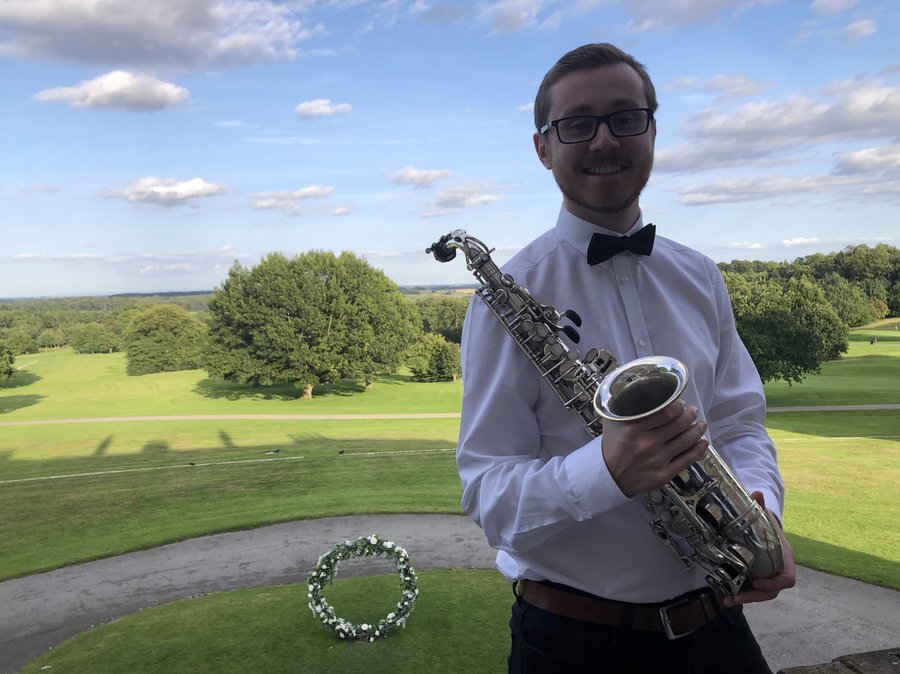
Joe Luca with saxophone

Projects &
Recordings

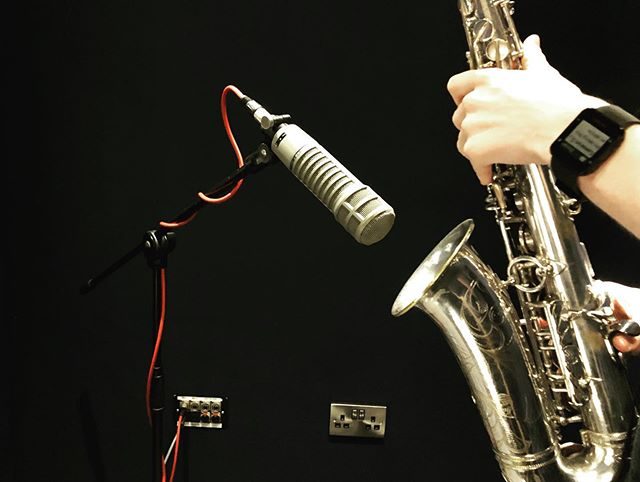
Saxophone at the microphone in the studio

01

Rooting For You

Sax version

Watch

02

Cascara Groove

Original

Watch

03

Magia en Caos

Sax cover

Watch

04

Ave Maria

Sax arrangement

Watch

Original Compositions
& Arrangements

A selection of original compositions and arrangements — the influences from which they were drawn, and the thinking behind them.

I would like to thank Steve Fishwick and Matt Anderson for their invaluable guidance with these compositions, which were the basis of my Final Year Composition Project at Leeds Conservatoire.

I

Ipixuna
do Pará

Quartet · Brazilian Jazz View Score

I originally wrote this piece for quartet, with the melody played on alto saxophone. I later added a second line on trumpet, but switched the parts over to give the melody to the trumpet, as the brighter timbre of the instrument cuts through clearer. As is typical for compositions within this style, Ipixuna do Pará starts with a vamp, which complements the Brazilian feel of my composition. A vamp is a short passage, which is simple in rhythm and harmony, played in preparation for the entry of a soloist; it is usually repeated ad libitum until the soloist is ready. I have drawn influence for the vamp in my composition, as it is a feature that has long been present in Brazilian jazz, and it continues to be used in contemporary writing.

II

Joe’s
Nose

Contrafact · Tristano tradition View Score

Contrafacts are a key part of the jazz repertoire. The late saxophonist Lee Konitz is strongly associated with the contrafact — a musical work based on an earlier composition. I have been drawn to Konitz’s work since hearing him perform in 2018, and wanted to explore for myself some of these concepts that I witnessed that evening. Konitz once said about Charlie Parker, “No one really studied with Bird directly, but they all tried to play exactly like him”, and although Tristano was known for his extended, rhythmically complex eighth-note lines, these were not derivative of the bebop as such, but it was an influence nonetheless. In the same sense, I wanted to take existing music and make my own music from this. However, I didn’t want to simply imitate the sounds — to do this would, in the words of Marian Jago, “constitute failure on a number of levels according to the approach of this lineal tradition”. Joe’s Nose takes influence from the Lennie Tristano approach of creating a contrafact, in the style of Lennie’s Pennies.

III

Initiation
to Green

Quartet · Post-bop View Score

I wanted to compose a piece that conveyed the style of jazz that was being composed around the mid-late 1960s. In order to create this composition, I first researched and analysed a number of compositions by Wayne Shorter, a leading composer of the time whose techniques stretched the boundaries of standard jazz repertoire, as established by the “Great American Songbook”. Many of Shorter’s compositions feature introductions that consist of a repetition of a pair of semitonally adjacent chords. In Initiation to Green, I have drawn inspiration from Shorter’s use of harmony, which is more variable than in most jazz and popular tunes. Examples of these successive chord sequences can be found in a number of his compositions, such as Deluge (1964) and Speak No Evil (1966).

IV

Cielo

Quartet · Jazz Ballad View Score

This composition is a jazz ballad, written in a similar style to existing standards such as Body and Soul, and My One and Only Love. Its title comes from the Spanish word for heaven because, to quote Michelle Obama, “Heaven, as I envisioned it, had to be a place full of jazz”.

As an alto saxophonist, I chose to write this composition for an alto saxophone-led quartet. In contrast to my other compositions, I wanted to write a slower composition that didn’t rely on the drum part to carry the momentum of the tune. For this reason, the composition relies on the forward motion of the phrases played by the melodic instruments — including the piano and double bass — to maintain the progression. In order to use the piano as a melodic instrument, I have written right-hand phrases into the score, and left deliberate space for the pianist to improvise responding phrases ad lib. The double bass plays a particularly active part throughout, responding to the sparse piano phrases in the introduction and playing counterpoint melody lines to the alto saxophone throughout the head. The drums are given plenty of freedom to improvise phrases over this ballad, to add a more atmospheric feel — an approach inspired by Sebastian Rochford, particularly his work on Trio Libero.

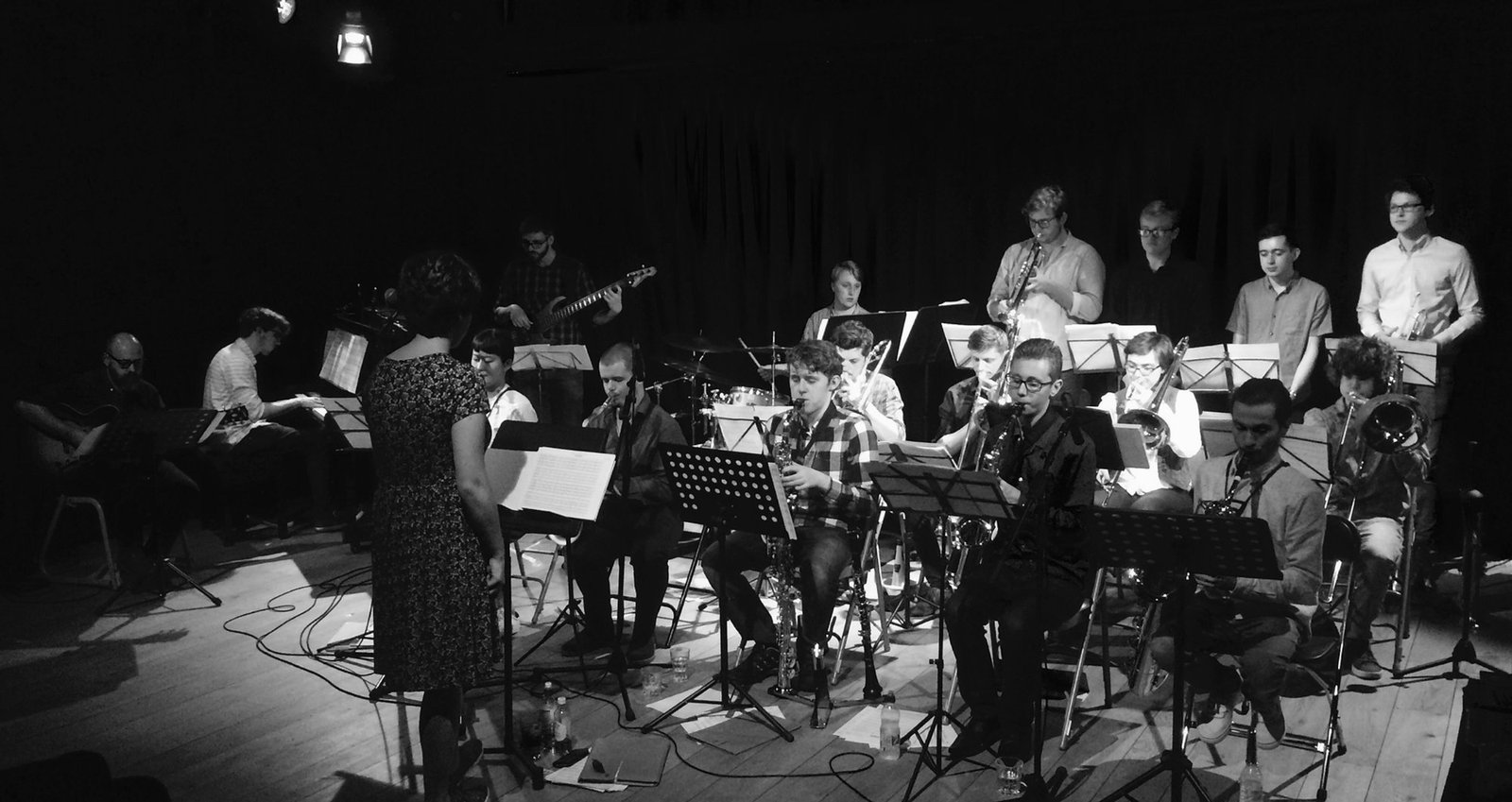
Joe Luca performing with big band ensemble
Big Band Arrangements
V

Zari­güeya

Nine-piece ensemble · Original View Score

This is an original composition of mine, arranged for a nine-piece ensemble. I created this work for a university module on Big Band arranging, which taught me a great deal about composing for nonets.

VI

There Is No
Greater Love

Big Band · Arrangement View Score

I wrote this big band arrangement for a second year assignment at Leeds Conservatoire, drawing from Amy Winehouse’s melodic phrasing of this Isham Jones standard.

On
Stage

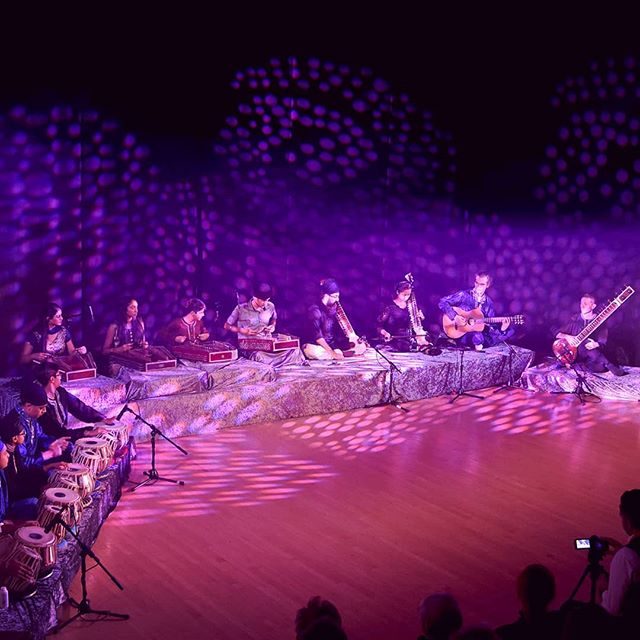
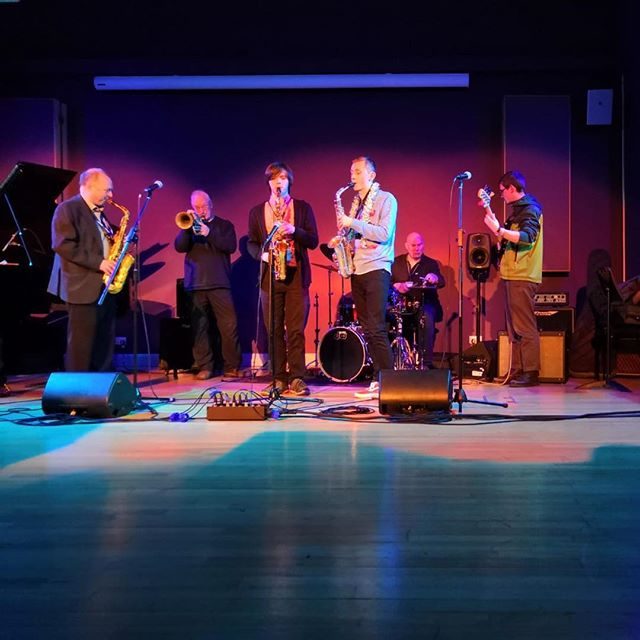
Large Indian classical ensemble with purple stage lighting
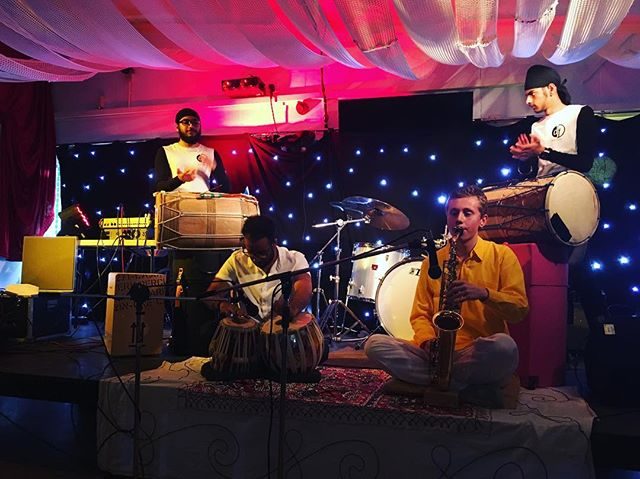
Joe Luca performing with Indian classical musicians
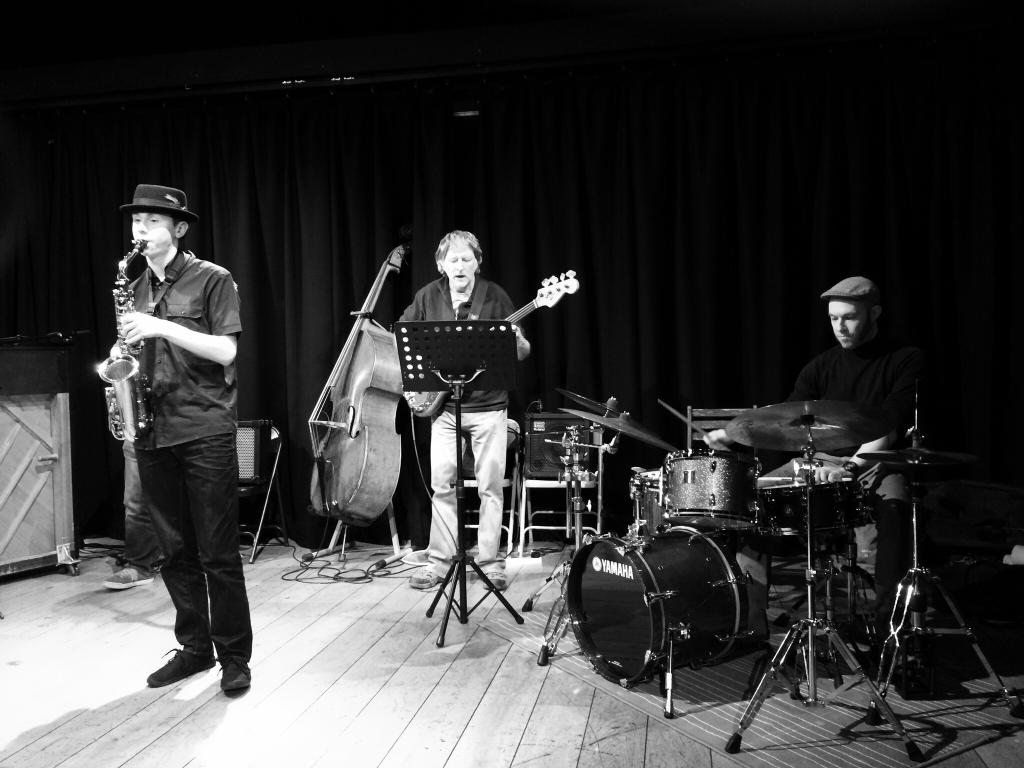
Joe Luca jazz trio in black and white
Joe Luca performing with jazz ensemble

With
Gratitude

My music education has been an eclectic mix of tutors and others. All of the following people have helped me love music and become the performer I am.

Thank you all — Joe Luca

Matt Anderson John Ball Jesse Bannister Colin Byrne Bhupinder Singh Chaggar Anol Chatterjee Benn Clatworthy Jim Corry Ben Cottrell Steve Crocker Chris ‘Snake’ Davis Jasdeep Singh Degun Brendan Duffy Jonny Enright Amy Gamlen Ranjana Ghatak Jenny Hoy Ed Jones Simon Kaylor Lauren Kinsella Tony Kofi Martin Longhorne Jo McCallum Rob Mitchell Dominic Moore Rebecca Morgan Roopa Panesar Robin Porter Joel Purnell Matt Roberts Tom Sharp Jamil Sheriff Dharambir Singh Harjinderpal Singh Michael Sluman Penny Stirling Darren Stott Martin Townsend Keranjeet Kaur Virdee Colin Watson Jean Watson

Get
in Touch

For bookings, collaborations, press enquiries, or just to say hello — I’d love to hear from you.

Loading…